
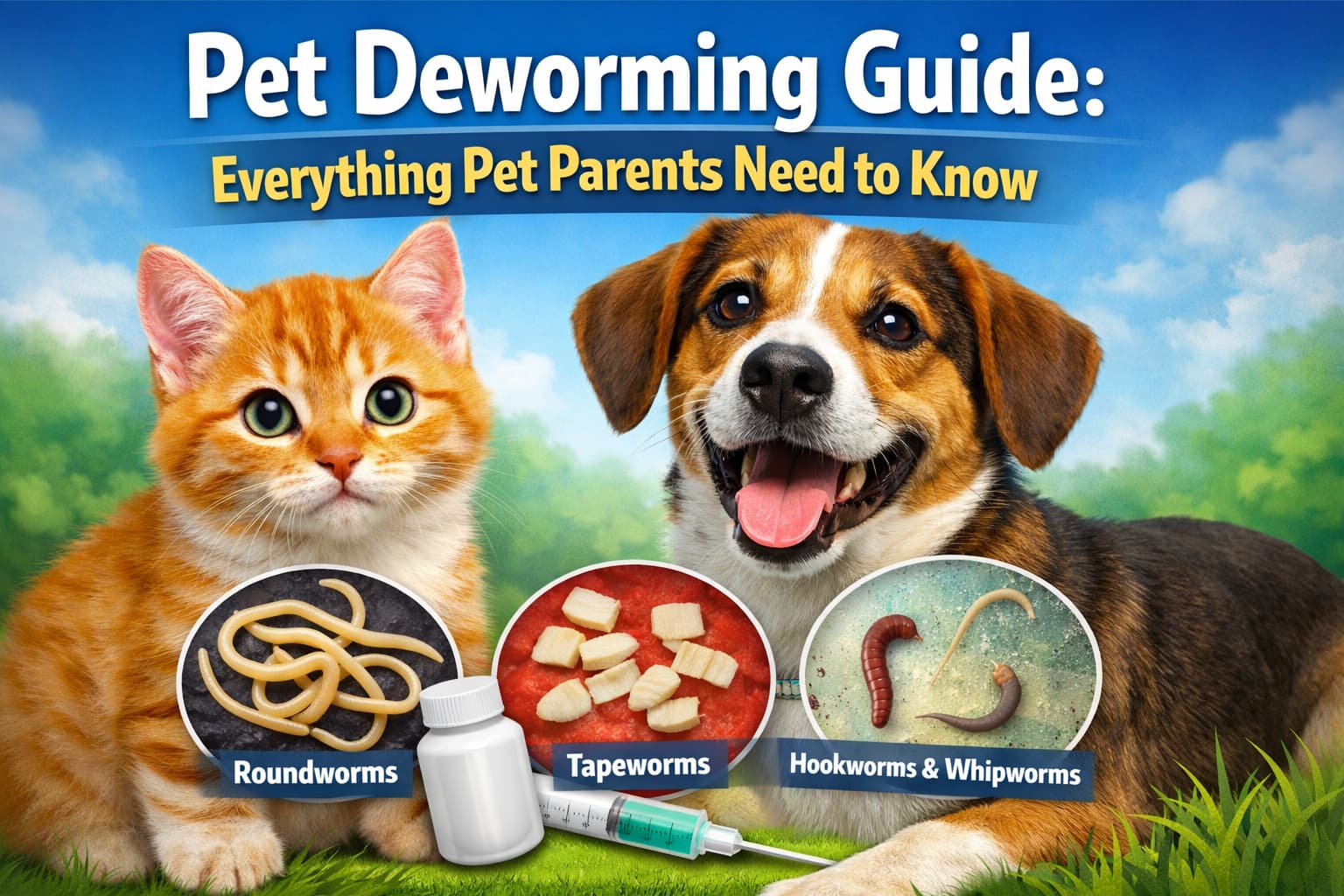
Pet Deworming Guide: Everything Pet Parents Need to Know
Deworming is one of the most essential yet commonly misunderstood aspects of pet healthcare. In this blog, I will answer the questions I am most frequently asked by pet parents in my clinic — such as when to start deworming in puppies and kittens, the correct deworming schedule, what to do if a dose is missed, which dewormers are safe for puppies and kittens, and whether indoor pets also need deworming. This complete guide will help you understand why regular deworming is crucial for your pet’s long-term health.
What Is Deworming?
Deworming refers to the use of medications (anthelmintics) to eliminate or control internal parasites (endoparasites) present in pets. These parasites mainly affect the gastrointestinal tract of dogs and cats and commonly include roundworms, hookworms, tapeworms, and whipworms. If left untreated, worm infestations can cause poor growth, digestive problems, anemia, low immunity, and in severe cases, life-threatening illness.
When Should First-Time Deworming Be Given?
The first deworming should be given at 2 weeks of age in both puppies and kittens. Young pets commonly acquire worms from their mother, either through the placenta or via milk, which is why early deworming is extremely important.
Dewormers must always be species-specific and age-appropriate. For example, some formulations are made only for puppies and others only for kittens. Commonly used puppy and kitten deworming syrups come with a dosage mentioned on the label, usually based on body weight (often 1 ml per kg, but this can vary depending on the product).
Giving the correct dose is critical. An underdose may not completely eliminate the worms, leading to reinfestation, poor immunity, and health problems during stressful periods such as vaccination, illness, or growth spurts.
Recommended Deworming Schedule
The standard deworming schedule recommended for dogs and cats is as follows:
- First deworming: At 2 weeks of age (15 days)
- Repeat every 15 days until 3 months of age
- Once every month from 3 months to 6 months of age
- After 6 months of age: Once every 3 months for life
If deworming is started late (for example, at 3 months of age or later), it is usually recommended to deworm every 15 days for three consecutive doses, and then continue according to the age-appropriate schedule.
What If You Miss a Deworming Dose?
If you miss a scheduled deworming dose, give the missed dose as soon as you remember and then continue with the regular schedule. Missing doses can allow worms to multiply again, increasing the parasite load and health risks. In cases of long gaps or recurring infestations, consult your veterinarian for a revised deworming plan.
Does an Indoor Pet Need Deworming?
Yes. Even fully indoor pets require regular deworming. Worm eggs can be brought into the house through shoes, clothing, raw food, insects, or other pets. Indoor cats and dogs are not completely protected from internal parasites, so routine deworming remains essential.
Signs of Incomplete or Heavy Worm Infestation
Pets with incomplete deworming or heavy worm load may show the following signs:
- Vomiting or diarrhea
- Loose stools (pasty, mucus-covered, or blood-tinged stools)
- Pot-bellied appearance (especially in puppies)
- Weight loss or poor body condition
- Dull coat and weakness
- Low immunity and frequent illness
Long-term infestation can result in stunted growth and chronic digestive issues.
How Is Worm Infestation Confirmed?
To confirm worm infestation, a routine stool (fecal) examination is performed at the clinic. This test helps identify worm eggs, larvae, adult worms, blood cells, pus cells, and undigested food particles. Based on the findings, a targeted deworming protocol can be planned.
Frequently Asked Questions
Q: My pet gets worms repeatedly even after regular deworming. Why?
A: This can happen due to incorrect dosage, use of a narrow-spectrum dewormer, poor hygiene, environmental contamination, or concurrent ectoparasite infestation.
Q: Can ectoparasites like fleas and ticks cause worm infestation?
A: Yes. Fleas act as intermediate hosts for certain tapeworms (such as Dipylidium caninum). If ectoparasites are not controlled, pets can get reinfected with worms despite regular deworming. Therefore, ectoparasite control must always go hand-in-hand with deworming.
Q: My lab report shows a specific type of worm. What dewormer should I use?
A: Different worms require different medications and treatment intervals. In such cases, a specific dewormer and regimen is selected based on the parasite identified. Always consult your veterinarian before starting or changing any medication.
Need Help Choosing the Right Deworming Plan?
If you are unsure about the correct dose, type of dewormer, or deworming schedule for your pet, professional guidance is essential. Our Head Veterinarian, Dr. Mukesh, can help you design a safe and effective deworming plan tailored to your pet’s age, weight, lifestyle, and health condition.
Book an appointment today to ensure your pet stays healthy, parasite-free, and protected.